
A Home Performance Story
The Home Performance Program with Energy Star Program has always been an interest of mine since starting my job at Chapman over 5 years ago. I was intrigued by the idea that a homeowner could be rewarded for making their home more eco-friendly. And now, as a recently new home owner, I would finally be included! We purchased our first home in northern Boone County in November 2018. We knew moving into a 1900 sq. ft all-electric home, that the operating costs would be a little bit more than our 800 sq. ft propane/electric rental. But I was in for a surprise!
Our first 2 months electric bills were just under $300. Not too bad…I could handle that. But then came the coldest weeks of Winter (that I ever can remember) and we were hit with a staggering $497.63 electric bill! After keeping the thermostat at 63* for almost 2 months and using our wood fireplace as much as possible, I was devastated. Some might not be shocked or surprised, but I was taken aback…very far back (I’m not wanting or meaning to scare anyone; this is just my story, and I’ve been told I can be dramatic). My husband and I knew that we had a spiderweb of holey flex duct, an inefficient and undersized air conditioner, and only 6” of cellulose insulation when we bought the home, and now we had to get going on our improvements fast before I had another heart attack!
Enter Tony Rigdon, Chapman’s very own Home Performance Specialist and my new instructor (HGTV should really do a series on this program and everything that Tony does to make it possible for home owners to get their rebates!). Thanks to the Home Performance Assessment Recommendations Page, we knew our big goals would be to insulate the duct work, add blown cellulose to the attic, and replace the AC with a heat pump. Tony informed us on how to both, qualify for the max insulation rebates and how to do as much as possible on our own. (My husband also works in HVAC and plumbing, so he’s my very own in-house contractor.) I’m a numbers person. I love cost analysis reports and finding ways to save money and energy. Seeing that our house scored a 1 out of 10 for high energy use was a great motivator. So, we decided to start with the attic.
After completing our Pre-Test/Energy Audit, we found the following statistics on our home:
- We were currently wasting 69% of energy on inefficiencies
- We could save $2154 a YEAR on energy costs
- We could eliminate 57% of co2 emissions with cost-effective upgrades.
First, we replaced all the excess and holey flex duct in the attic with straight insulated runs of metal duct work that was appropriately sized for our home and our heat pump. Thankfully a coworker was able to assist my husband way better than I would have! Next we started insulating all 857 can lights. Maybe it was only 27 can lights, but it sure felt like a lot more than that once we were done. Tony instructed us on how to make the right kind of boxes with drywall to go over the can lights and seal all edges with spray foam. By enclosing the can lights, we would prevent extra dust from the cellulose we’d be adding (Read: less dusting for me! Yay!).
Once that was all done, we started the biggest job of insulating the attic. We were depending on this to help keep energy costs down by sealing in the heated or conditioned air. We insulated our new ductwork with batts of R-13 fiberglass, qualifying us for an additional $300 rebate. Then we constructed an insulated lid for our attic stairs. Tony gave me thorough instructions on how he insulates the duct for his customers, and it was a lot easier than I thought. I cut the bats to fit the duct, while my husband molded it around the runs of duct, and we were done in less than 2 hours. We were then ready for the dusty job of adding the cellulose. It took 80 bags of cellulose to bring our attic up to par with the standard for energy efficiency and rebates, landing us the max $500 rebate. It took my husband almost 4 hours to blow that all in with someone loading the hopper with the cellulose. The attic work was done, and he was ecstatic.
The last goal of replacing the air conditioner with a heat pump was up next. Thankfully that was installed the next day with no hiccups and only took him a few hours. We were done. Well, almost.
Tony came back with a representative from Boone Electric to complete our Post Test. I got o[Untitled] 2ut of work early to witness the final step of the process. Tony installed the blower door onto my front door and took all the data that was recorded from the machine to our final Post Assessment Form. We were now a 5 out of 10 for higher energy use. No longer a sulking 1.
We also improved the statistics from the Pre-Test:
- We currently wasting 17% of energy on inefficiencies.
- We could save $216 each year on energy costs.
- We could eliminate 11% of CO2 emissions with cost-effective upgrades.
I would have loved to have all of those be $0 or 0%, but I’m also a realist. We made a very large dent in those numbers and I feel so much more relieved knowing we weren’t being so wasteful with our energy consumption.
If you have any questions about how the Home Performance with Energy Star Program works, they have a document online with a list of their policies that must be followed. You can also reach out to Tony here at Chapmans or the City of Columbia. For those out of city limits, you would need to contact the Boone Electric Cooperative.
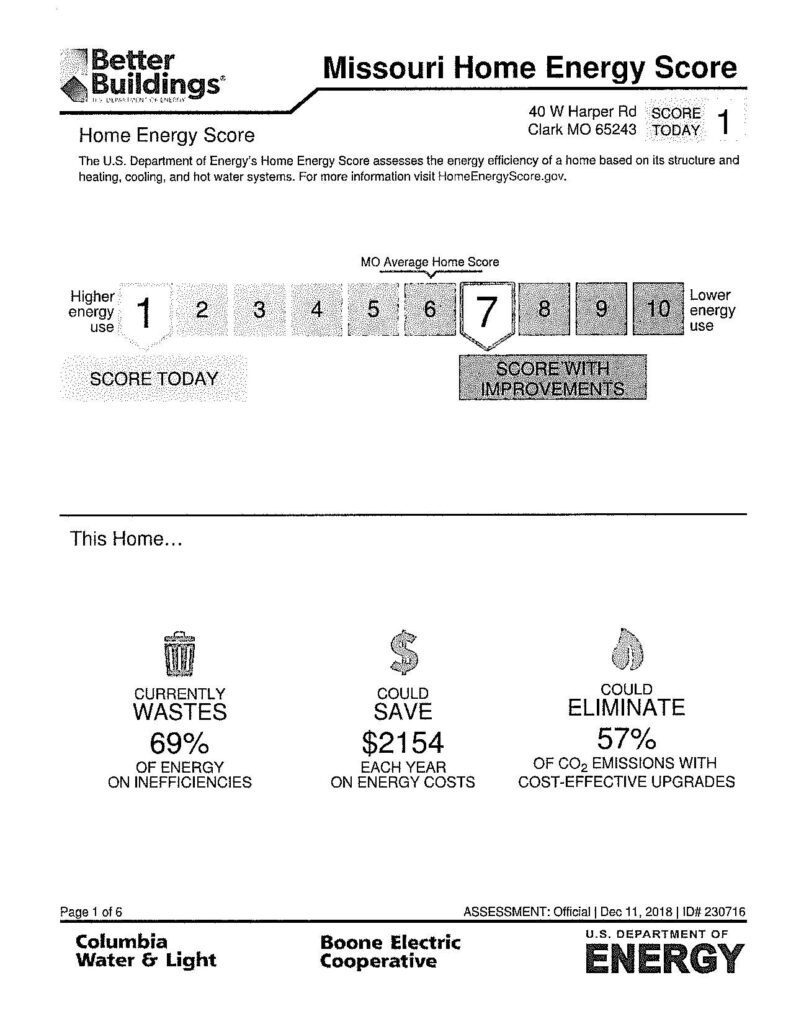
Report Before
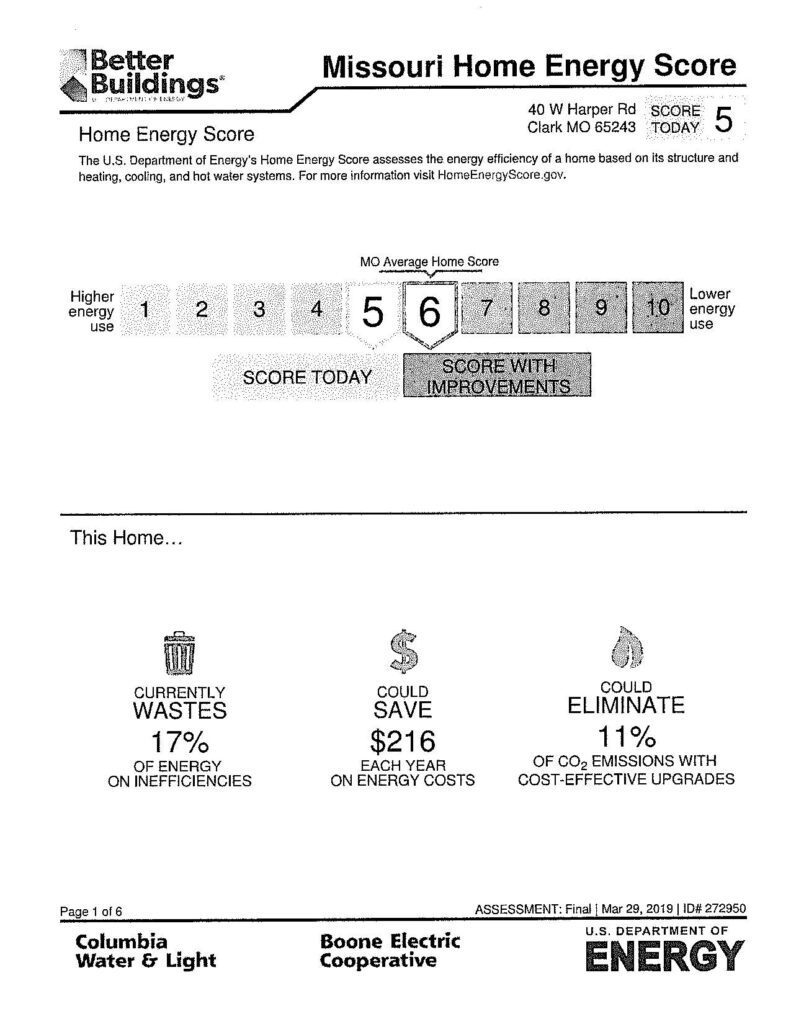
Report After
